The essentials
- The operator states this plainly, and it is about the ship rather than about the itinerary.
- A height minimum rather than an age one, because the survival suit has to seal.
- Declining the float takes nothing else away. The cruise is the tour.
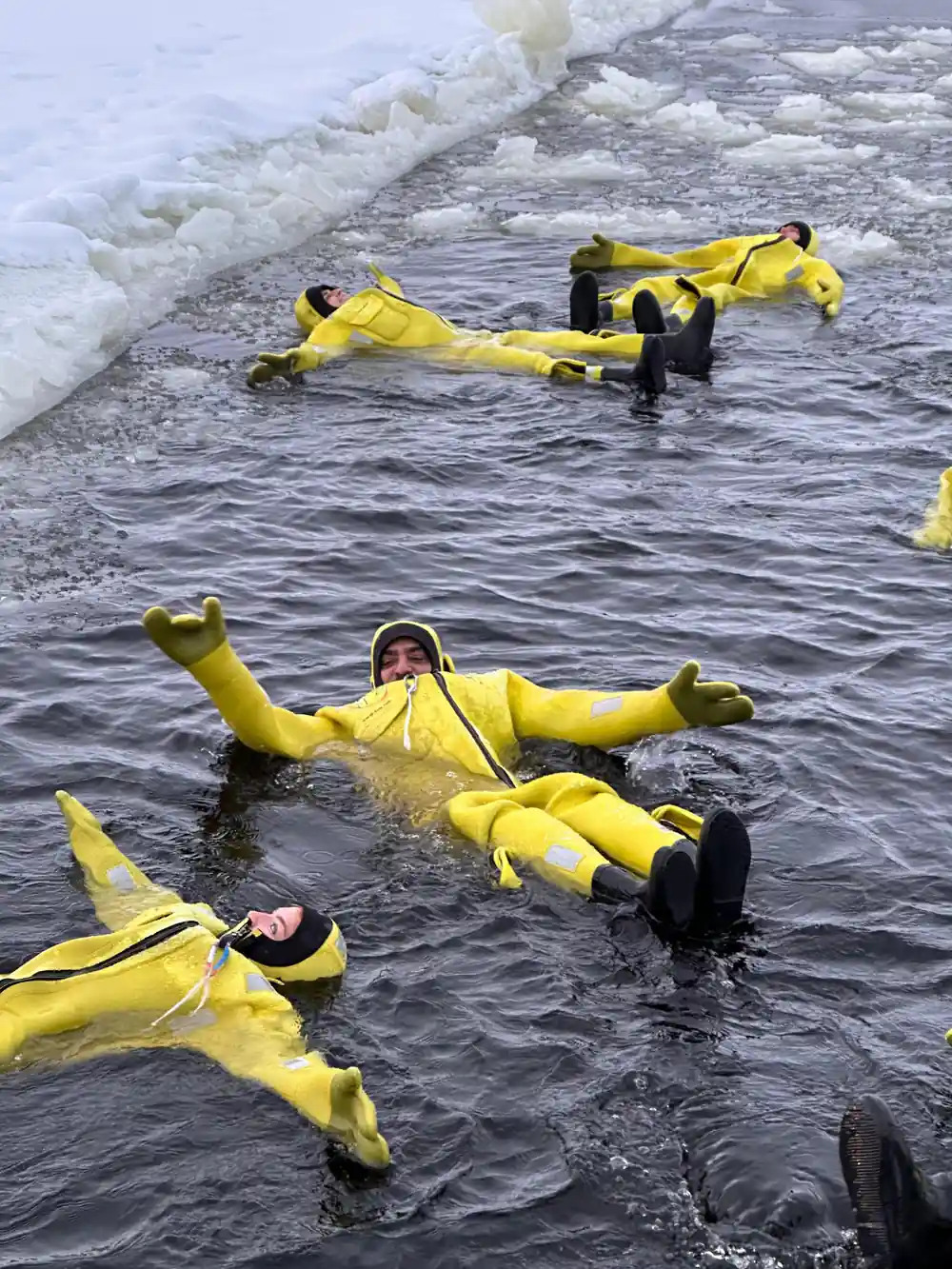
- The suit floats you. Nobody swims and nobody needs to.
The mobility restriction
The operator will not carry passengers whose mobility is limited on this sailing. That is unambiguous and it is worth resolving before booking rather than discovering at the gangway.
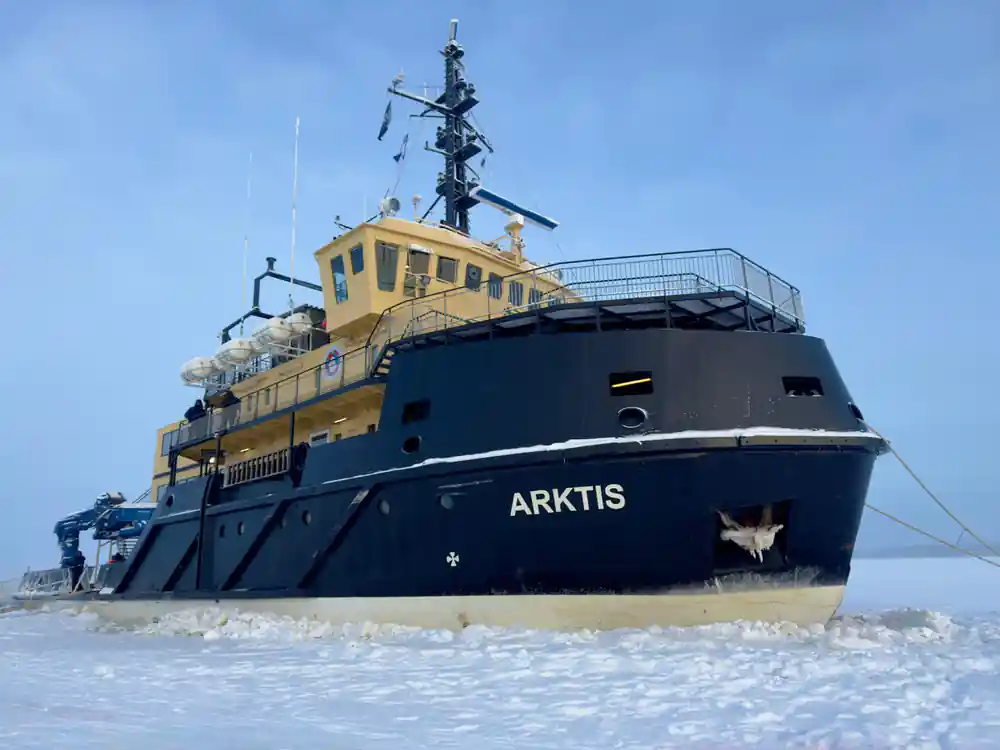
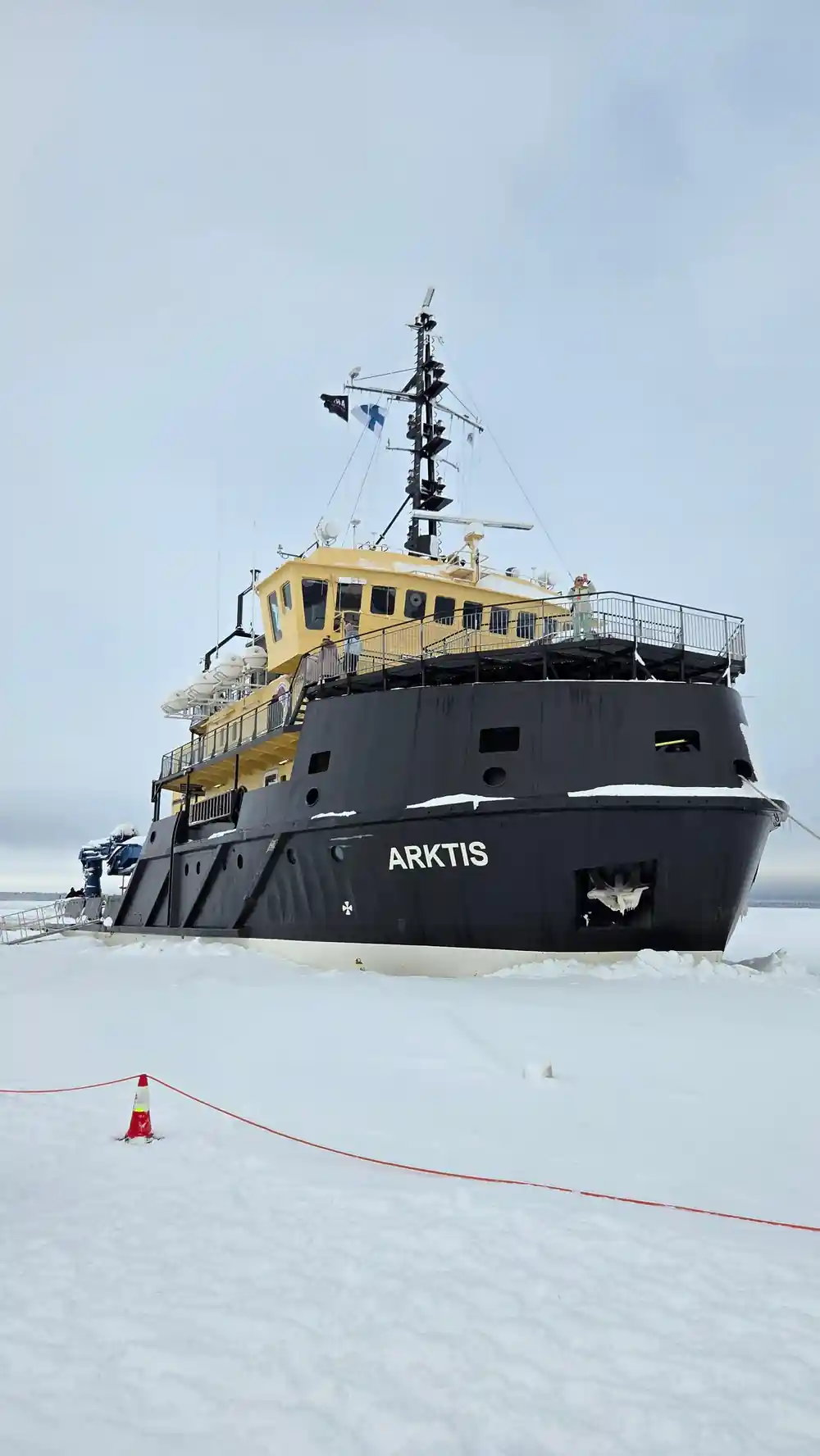
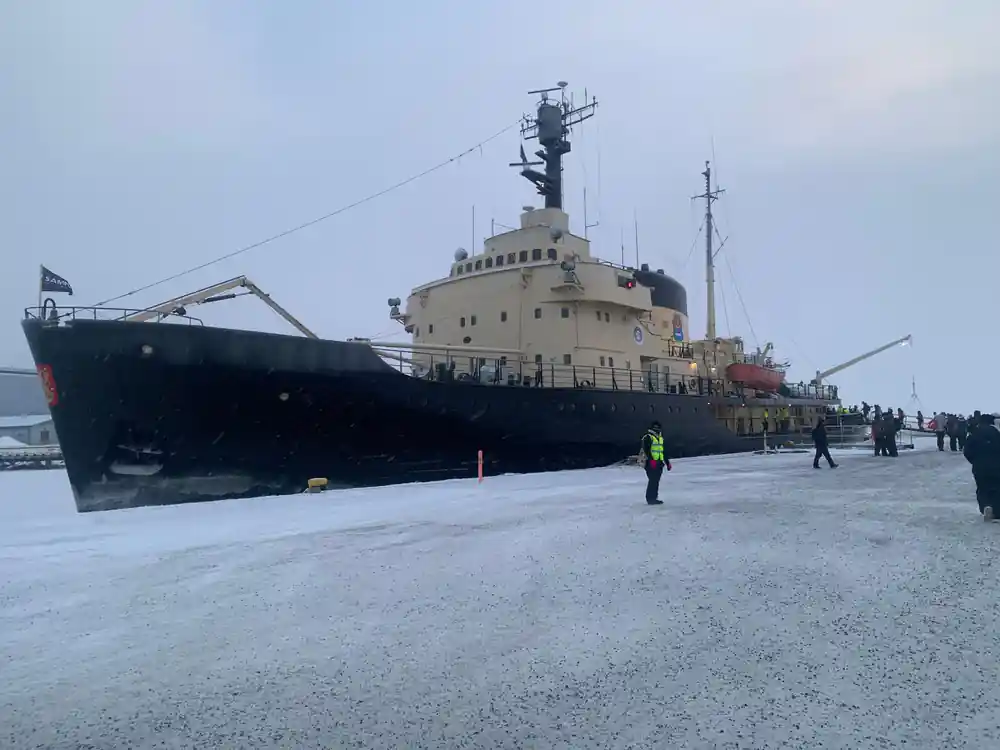
The reason is the vessel. A working icebreaker is not built as an accessible passenger ship: there are steps, thresholds, a gangway that moves with the ice, and decks that are not level in the way a ferry is. None of that can be engineered away for a single sailing.
If mobility is a question for anyone in your group, contact the operator through the booking before committing a day and a long coach journey to it.
It is also worth saying what the restriction is not. It is not a judgement about anyone and it is not a liability formula: it is a statement that a vessel built to break ice was not built to carry passengers who cannot manage a moving gangway, a raised threshold and a flight of steel stairs. On a purpose-built ferry the answer would be different.
The height limit on the floating
A hundred and forty centimetres minimum, and it applies to the ice floating rather than to the cruise. It is a height limit rather than an age limit for a specific and sensible reason.
The survival suit is safety equipment. It works because it seals at the neck, the wrists and the ankles, and a suit that is too large for its wearer does not seal. There is no smaller size on a ship that carries a standard set.
So a child under that height can come on the cruise and cannot go in the water. Whether that is acceptable is a family decision, and it is much better made in advance.
Children on board
Children do this tour and generally enjoy it a great deal. The ship breaking ice is a spectacle, the snow castle is a snow castle, and the certificate at the end lands well.
The constraints are the ten-hour day and the coach. Four hours of road for a small child is a real consideration, and the cruise is in the middle rather than at the start.
Check the operator listing for minimum ages on the booking itself, which may differ from the height rule for the floating.
One further point for families: the day is long and the cruise is in the middle of it. A child who is delighted at nine in the morning may be finished by four in the afternoon, and there is a two-hour coach between that moment and a hotel room. It is worth being honest with yourself about that before booking rather than discovering it on the road north.
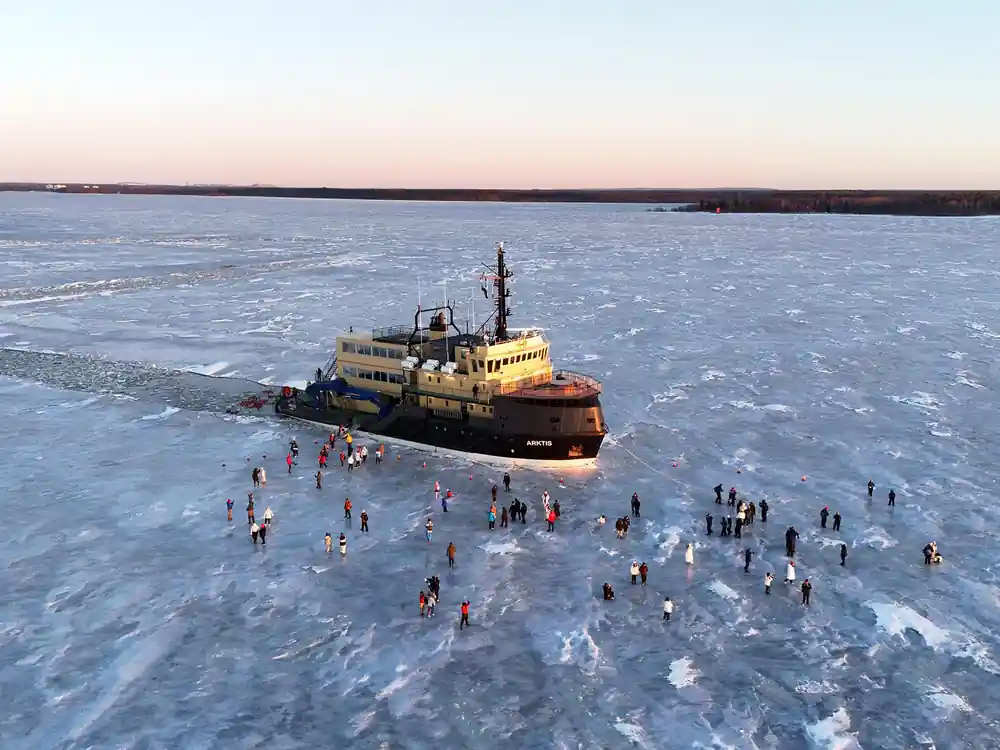
The gangway and the ship alongside at the quay
Opting out of the water
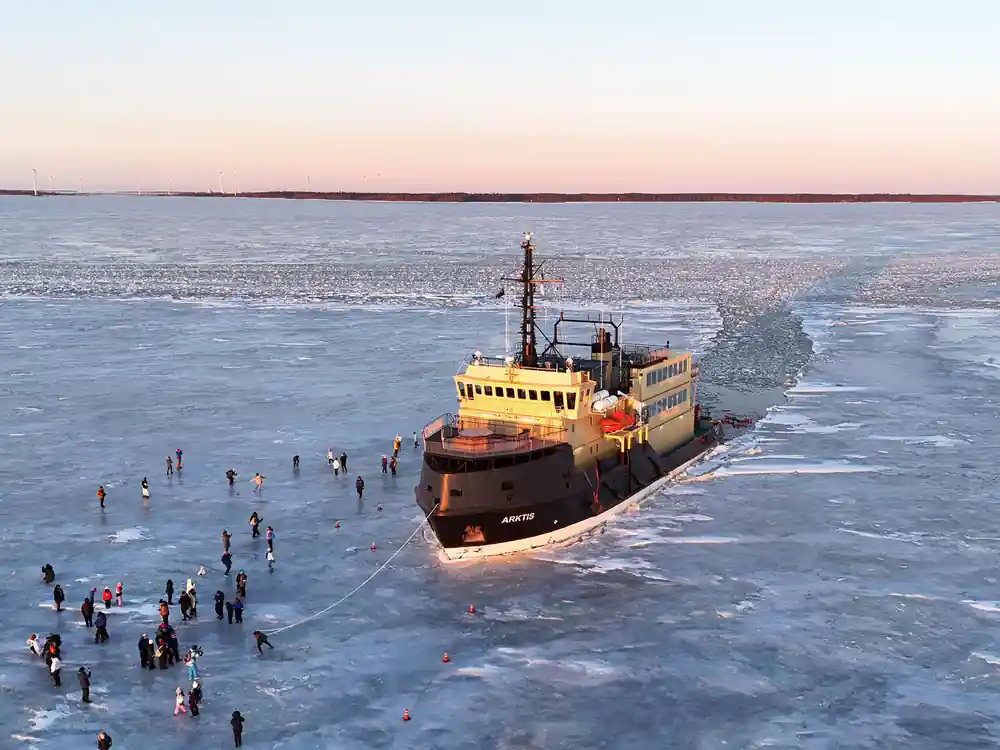
Entirely normal, and a proportion of every group does it. You watch from the rail, which is genuinely good entertainment, and nothing else about the day changes.
People also change their minds in both directions once they see the first group go in. The crew handle this without comment.
If you are undecided, do not decide in advance. Watch, and then choose.
Seasickness, and whether it applies
Broadly, no. A ship in a solid ice field does not roll, because there are no waves; the motion is a lift and a drop as the bow works, which is quite different from a swell.
Icebreakers are known for rolling badly in open water because of their rounded hulls, but that is not the water this cruise sails in.
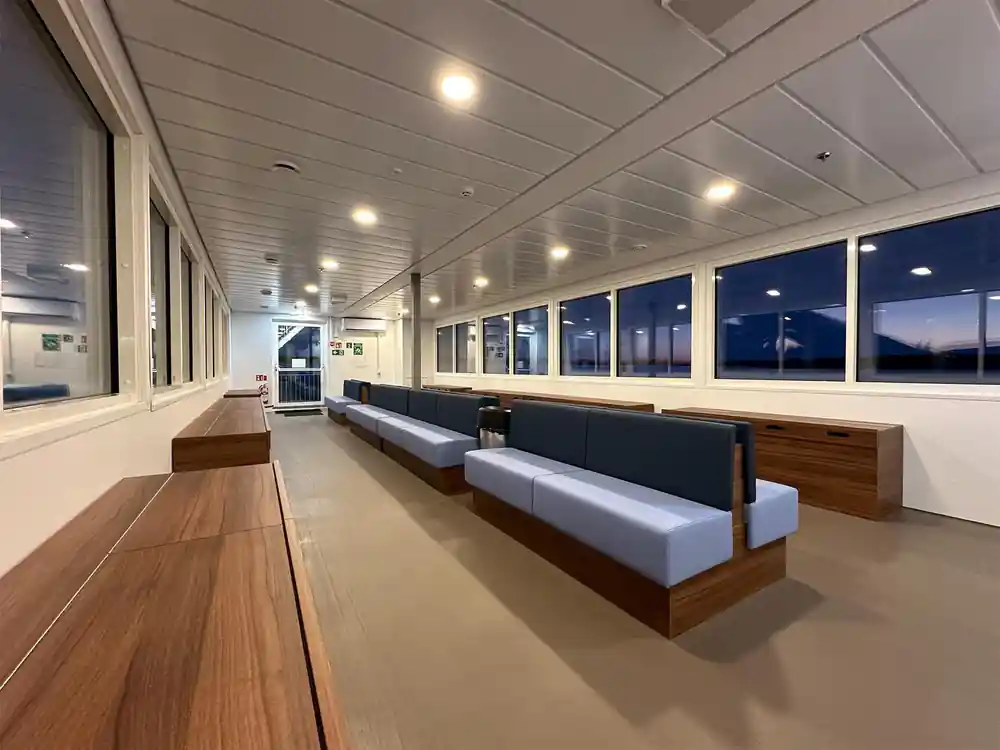
If you are extremely sensitive, the working motion is still motion, and the heated indoor decks are the place to be.
Fitness, and how much walking there is
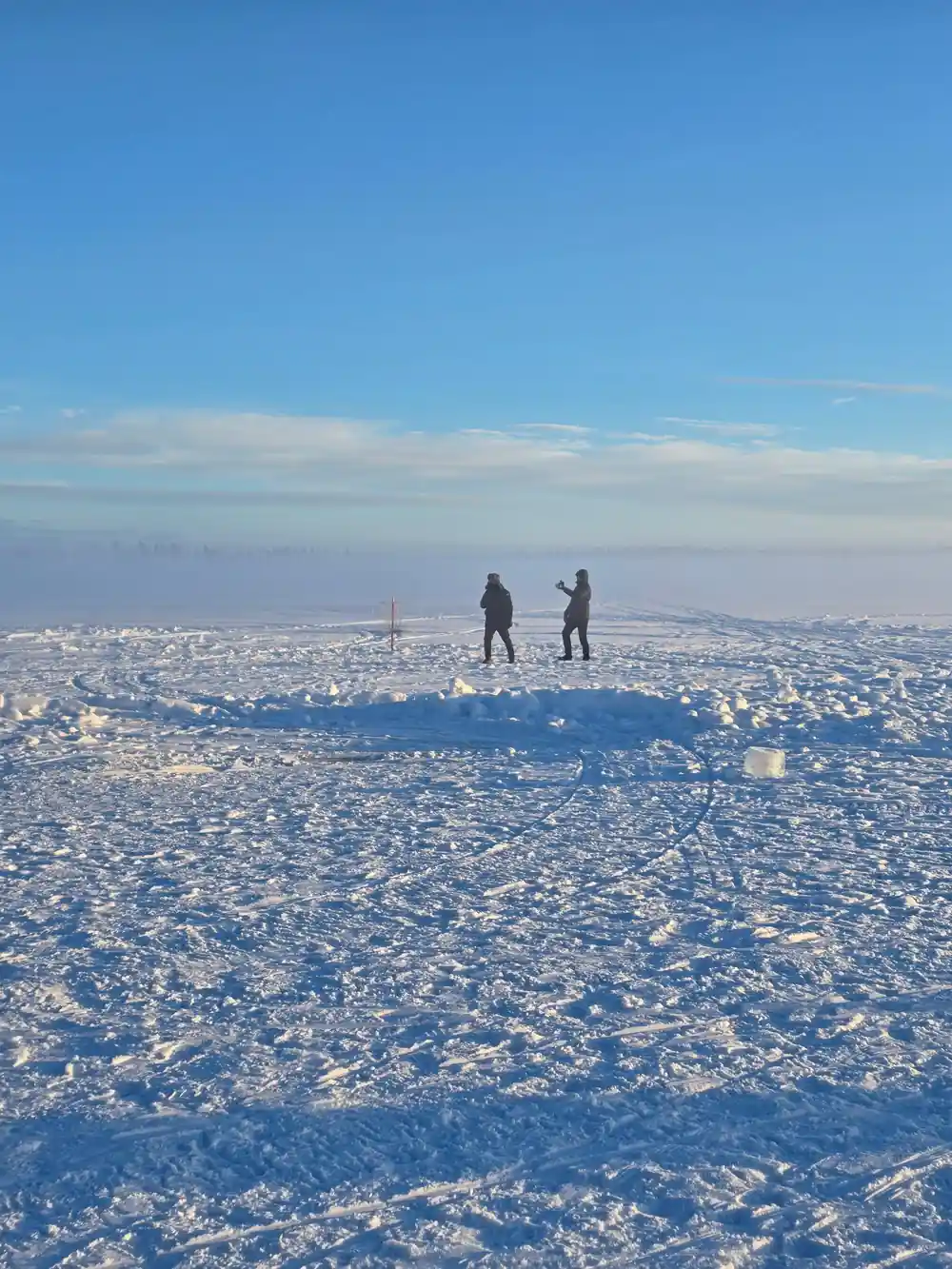
Not a demanding day physically, but not a sedentary one either. There is walking at the harbour and around the snow castle area, boarding and disembarking, stairs between decks, and getting in and out of a survival suit, which is more effort than it looks.
Everything is at your own pace and there is somewhere to sit throughout.
The exception is the floating itself, which involves a ladder and some assistance, and this is where the mobility restriction has its most obvious application.
The suit deserves its own note here. Getting into a sealed immersion suit is a whole-body manoeuvre involving bending, balancing and a certain amount of undignified wriggling, and the crew help. If that sounds difficult, it is a fair signal that the floating specifically may not be for you, even though the cruise itself is.
Asking before you book
This tour carries more hard constraints than most, and they are all knowable in advance. Height for the floating, mobility for the cruise, minimum age on the booking, and a ten-hour day with four hours of coach in it.
None of them is hidden and all of them are easier to check at the booking stage than at seven in the morning in a hotel lobby.
The operator answers questions through the platform. Ask them.
The last thing worth checking is the weather clause. A frozen sea is a natural surface and conditions decide what is possible on any given day, so ice walking is offered rather than promised and even the floating can be affected. Ask what happens if a component of the day cannot run, because that answer differs between operators and is much easier to hear before you have paid for it.
Two firm limits, both worth checking before you book
from US$473Reserve now & pay later