The essentials
- The near-universal assumption is that an icebreaker forces a channel by pushing. It does not.
- The sloped bow lifts the ship onto the sheet, and the weight of the vessel breaks the ice downward beneath it.
- Reinforced at the waterline and shaped to push broken plates down and aside rather than let them gather ahead.
- In heavy ice a ship backs off and charges, repeatedly, which is as dramatic from inside as it sounds.
Why an ordinary ship cannot do it
A conventional hull is designed to part water, which offers almost no resistance, and to do so efficiently. Presented with a solid sheet, it simply stops. Worse, the plating along the waterline is not built to take the sustained grinding that pack ice applies, and an ordinary vessel forced into ice risks having its side opened.
So icebreaking is not a matter of adding power to a normal ship. It needs a different hull, differently shaped and differently built, and a great deal of power for its size.
That is the whole reason a specialised fleet exists, and the reason a country with a frozen coast maintains one at public expense.
Riding up, not pushing through
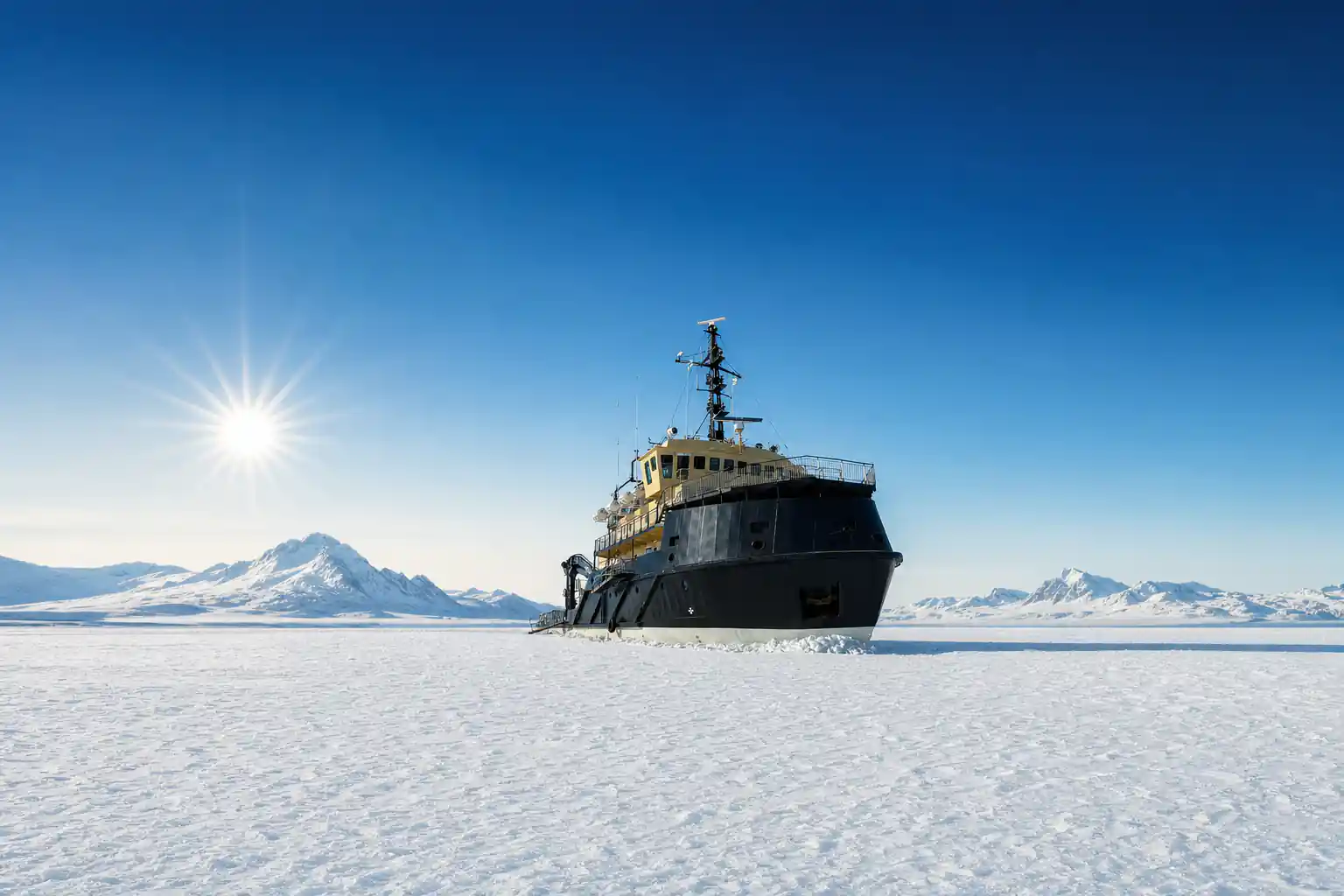
The bow of an icebreaker slopes. Instead of meeting the ice edge-on, the ship drives forward and the slope lifts the bow up onto the surface of the sheet.
Then the ice fails, because the weight of the vessel is now bearing down on it from above and ice is far weaker in bending than in compression. The sheet cracks downward, the ship drops through, and the process repeats continuously as it advances.
This is why the sensation from inside is a lift, a pause and a drop rather than a shudder. Once you know what is happening it becomes obvious, and it is the single most satisfying thing to understand before boarding.
There is a neat consequence of this that becomes obvious once you have seen it: an icebreaker is at its most effective when it is heavy. Ballast tanks are used deliberately for exactly that reason, and some ships can shift water from side to side to roll themselves free when the hull is gripped. The vessel is not fighting the ice so much as using its own mass as the tool.
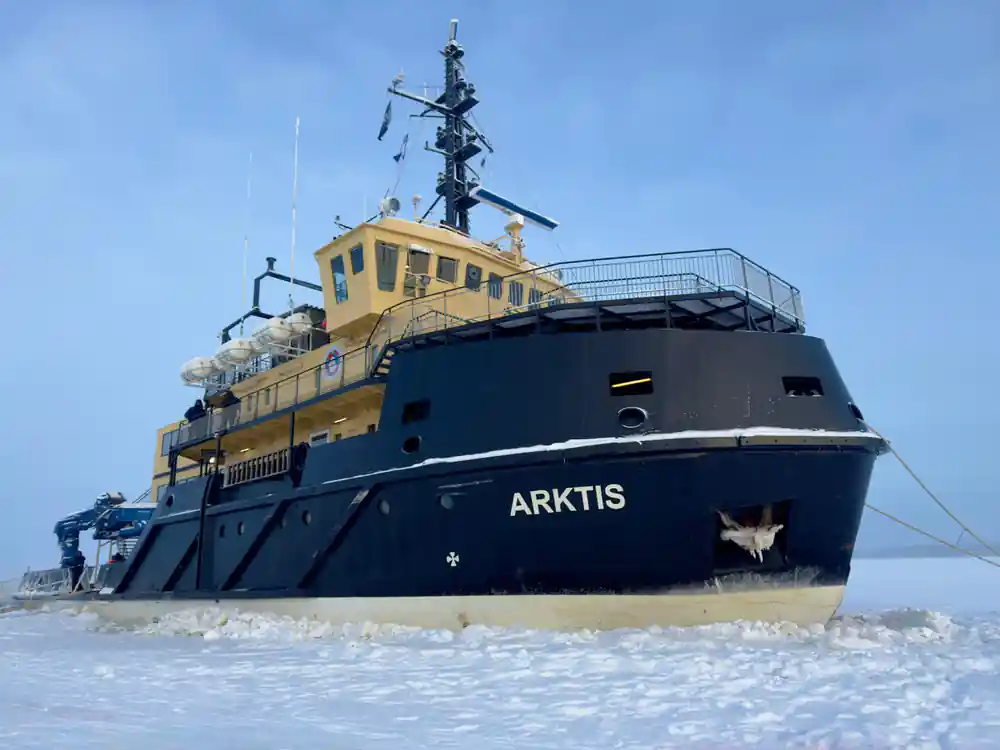
The bow riding up on an unbroken sheet
What happens to the broken ice
It has to go somewhere, and if it collects in front of the ship it becomes an obstacle in its own right. So the hull below the waterline is shaped to push the broken plates downward and out to the sides, where they slide along the hull and surface again behind.
That is the channel you see astern: a lane of overturned slabs, some of them a metre or more across, with black water between them. It stays open for a while and then refreezes, which is why escort runs have to be repeated.
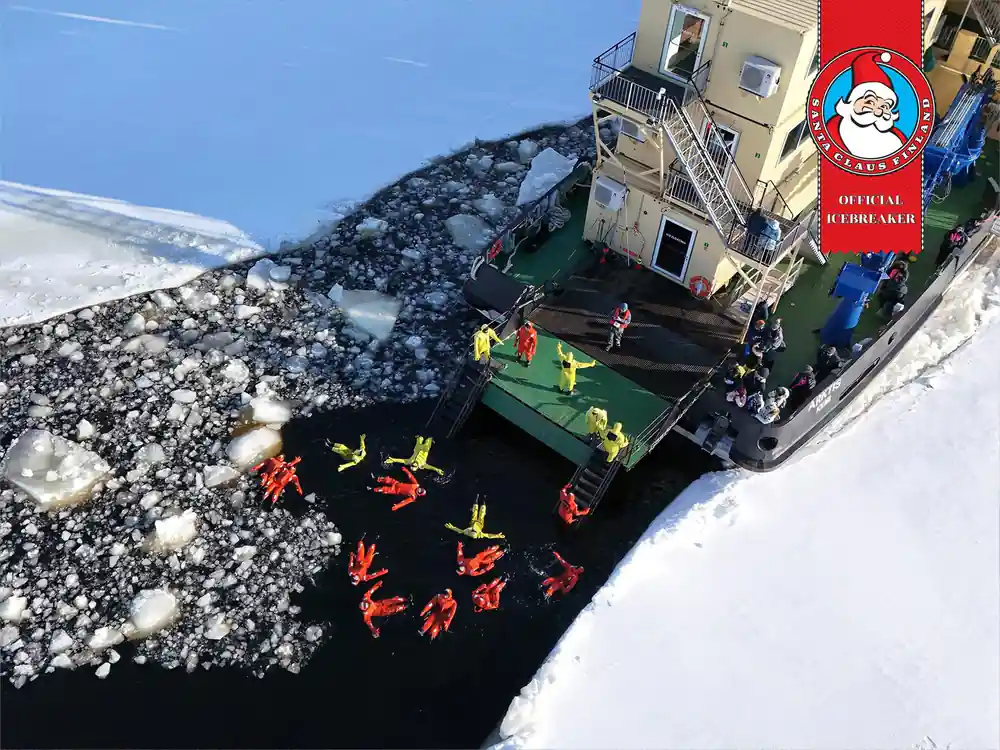
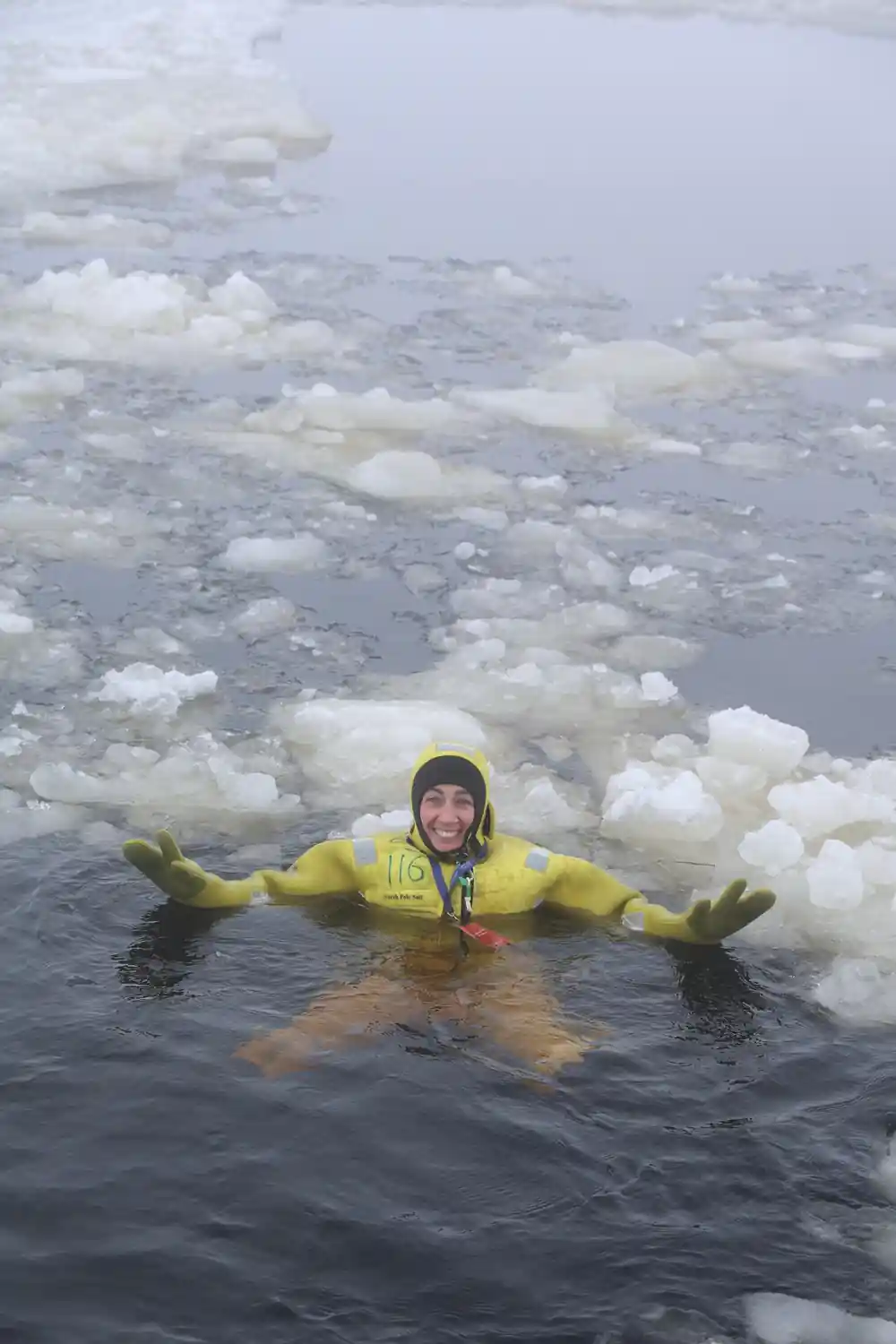
It is also, incidentally, where the ice floating happens. The broken ice behind the ship is the water you are put into.
The hull itself
Reinforced heavily along the waterline, where the ice does its work, with thicker plating and closer framing than an ordinary ship carries. The shape below is rounded rather than sharp, so that pressure from a closing ice field lifts the vessel rather than crushing it.
That rounding has a penalty: an icebreaker in open water rolls, considerably, because the shape that saves it from a closing ice field gives it very little grip on waves. Crews accept this as what the design is worth.
On a frozen sea it is irrelevant, which is the only sea this particular ship is asked to work.
This is why an icebreaker looks slightly wrong tied up alongside. The bow is too blunt, the sides are too round, the whole thing sits low and heavy in a way that a cargo ship of similar length does not. Every one of those apparent faults is the design working: it is a hull optimised for a medium that is solid rather than liquid.
0.5 m+
Ice thickness the Bothnian Bay can reach in a normal winter. It is why Finland maintains an icebreaking fleet rather than accepting closed ports for four months a year.
Power, and why so much of it
Icebreakers carry engine power out of all proportion to their length, because breaking ice continuously is enormously more demanding than moving through water. A great deal of that power is used simply to maintain steady progress against a sheet that is failing under the bow.
Propellers are heavily built and often shrouded, because ice reaches them. Steering has to work when the ship is effectively wedged, which is one reason many icebreakers use azimuth propulsion that can be turned in any direction.
The result is a vessel that feels heavy and deliberate rather than quick, and that is exactly what it is.
Ramming
When the ice is too thick for continuous progress, the ship stops making it. The technique then is to back off along the channel already made, build speed, and drive the bow up onto the sheet with momentum behind it.
This is repeated. A vessel may make a few metres per charge in serious conditions, backing and ramming for hours to advance a short distance.
On a passenger cruise you will usually see it demonstrated rather than needed, and it is worth being on deck for. The ship rears, stops dead, and drops.
The other thing worth knowing about ramming is that it is a last resort rather than a technique of choice. Every charge puts an enormous shock through the hull and the propulsion, and progress is measured in metres rather than in miles. A master will do almost anything else first, which is why seeing it is a genuine event rather than part of the routine.
Watching it happen
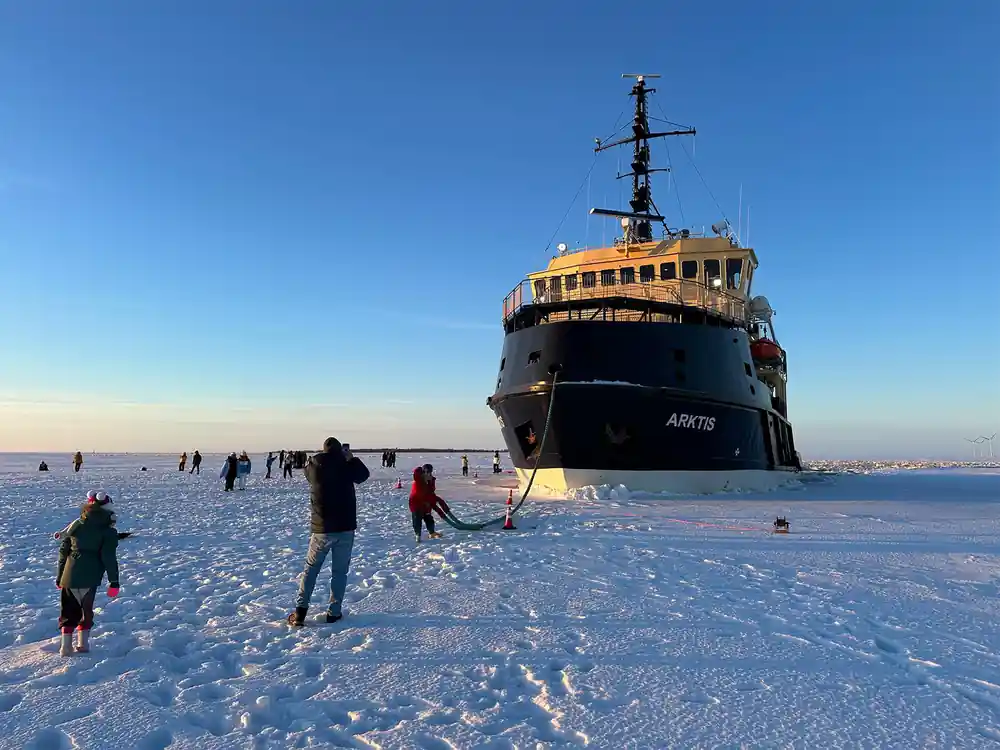
From the bow rail you can see the sheet ahead and the exact line where it fails. From the stern you can see what has been done to it.
Inside, the whole thing arrives as sound and movement through the deck: a rumble, a bang, a lift. Passengers spend the first twenty minutes reacting to it and the rest of the cruise not noticing.
Ask the crew what the ice is doing on the day. Thickness varies through the season and between years, and they will tell you exactly what the ship is up against.
See it from the rail, and feel it through the deck
from US$473Reserve now & pay later