The essentials
- The suit is sealed. Water at a fraction above freezing is on the outside of it and never reaches you.
- It is buoyant by design. Floating takes no effort and no swimming ability at all.
- The limit is height rather than age, because the suit has to seal properly to work.
- Anyone who would rather not go in stays aboard. It is part of the ticket, not an obligation.
What ice floating actually is
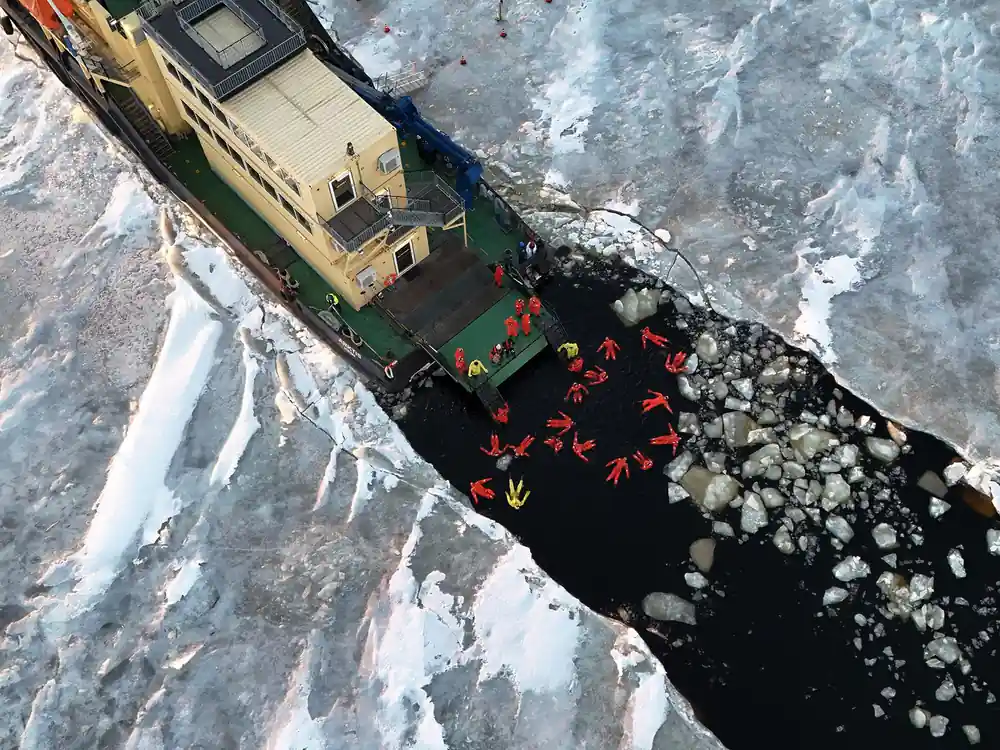
It is exactly what the name says and it sounds far more alarming than it is. At some point during the three hours, the ship stops, and passengers who want to are helped into the sea among the ice the ship has just broken.
You are wearing a survival suit. You lie back. You float. That is the whole activity, and the reason it has become the signature of the Bothnian icebreaker cruises is that there is nowhere else in the ordinary world where a person can lie on their back in a frozen sea and be perfectly comfortable.
It usually lasts a few minutes rather than a long time, which is plenty. The novelty does not wear off, but the strangeness settles into something oddly peaceful very quickly.
The suit, and why it works
A one-piece immersion suit, sealed at the wrists, ankles and neck, and buoyant enough that a person cannot sink in it. It goes on over what you are already wearing, which is worth knowing when you decide what to put on that morning.
Two things happen when it is closed. The first is that water is kept out completely, so the sea never reaches your skin. The second is that the air trapped inside becomes an insulating layer, which is why you stay warm rather than merely dry.
It is the same class of equipment used for real emergencies at sea, which is a reassuring thought while lying in a frozen bay looking at the sky.
One practical consequence of the suit going on over your clothes is that bulk matters more than warmth. A very thick down jacket makes the suit hard to close and the seals hard to seat, and the suit itself is doing the insulating anyway. Ordinary winter layers underneath are the right answer, and the crew will tell you if you have overdone it.
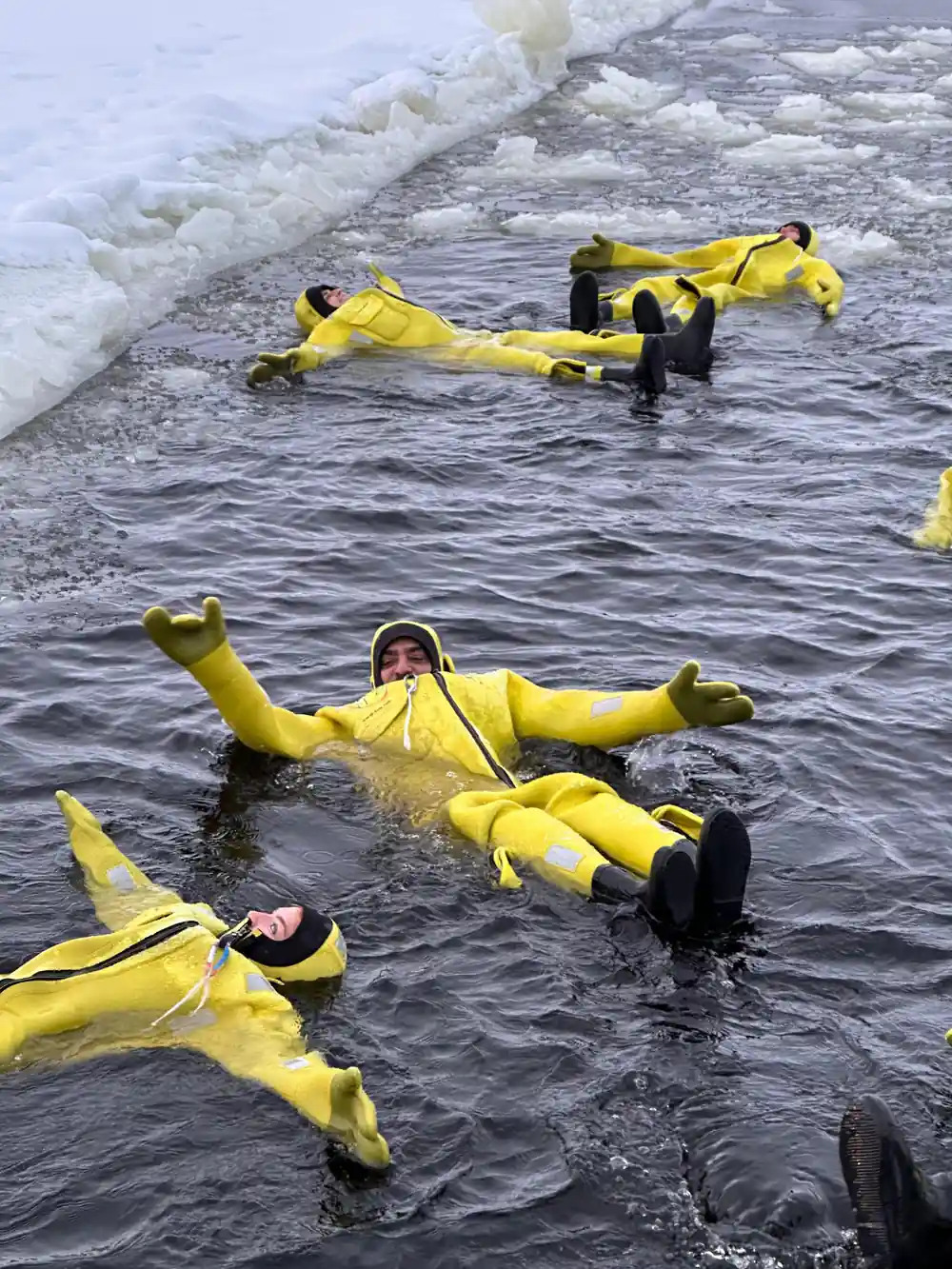
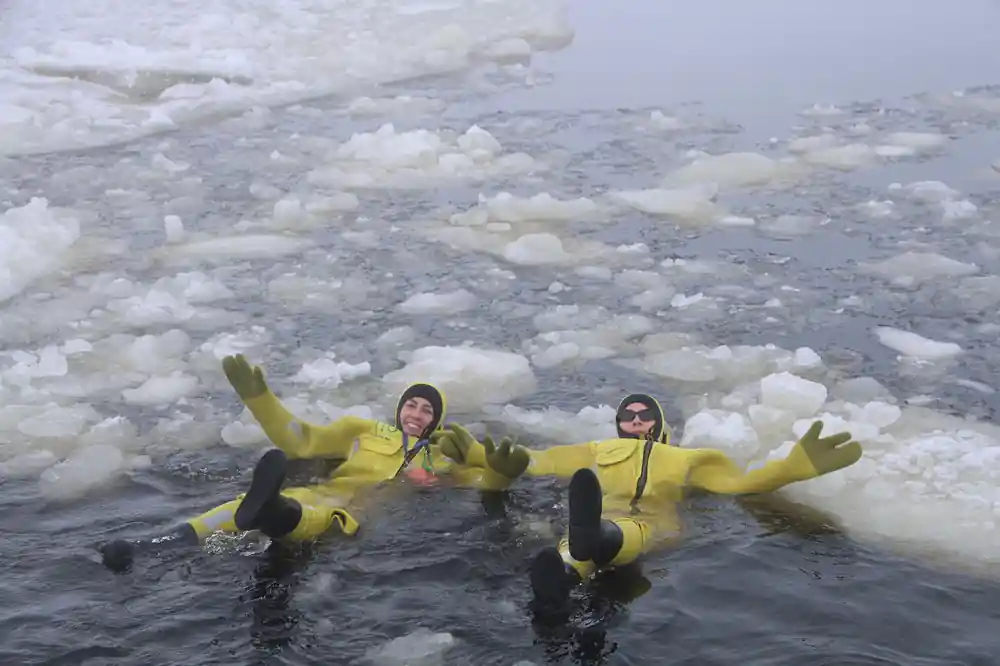
A floater in a yellow suit among the broken plates
Do you get wet, and how cold is it
You do not get wet. That is the single most common question and the answer is unambiguous: assuming the suit is closed properly, and the crew check it, the water stays outside.
The sea itself sits a fraction above freezing. In brackish water that is around minus half a degree rather than zero, and the ice above it is the proof that the temperature is where it should be.
What you feel is pressure and buoyancy rather than cold. Most people report the hands and the face as the only parts that register temperature at all, because those are the parts nearest the edges of the suit.
The first ten seconds
Nobody is entirely calm going in, and it would be dishonest to suggest otherwise. Water is closing around a body that has spent three hours being told how cold it is, and every instinct present says this is a bad idea.
Then nothing happens. The suit holds, you are floating, and the instinct is contradicted by the evidence within a few seconds. From that point almost everybody relaxes.
The thing people describe afterwards is not the cold at all. It is the quiet, and the view: lying flat on your back on a frozen sea, looking straight up at a Lapland sky in the middle of winter.
There is also a curiosity of buoyancy worth knowing in advance. Because the suit floats you high in the water rather than in it, the position you end up in is close to lying on a firm surface rather than treading water, and people who are nervous swimmers frequently find it far less unsettling than they had feared. You are not really in the sea so much as on it.
140 cm
The minimum height for ice floating. The limit is height rather than age, because the survival suit is safety equipment that has to seal at the neck and wrists.
The height limit, and who can do it
A minimum height of a hundred and forty centimetres. It is height rather than age because the suit is a piece of safety equipment that has to seal at the neck and the wrists, and on a person too small for it, it does not.
That is a firm limit rather than a guideline, and it is worth knowing before booking if you are travelling with children who are close to it.
Beyond that, you do not need to swim, you do not need to be fit, and you do not need to have done anything like it before. The suit does all of the work.
If you would rather not
Then do not. The floating is included and it is not compulsory, and a proportion of every group stays aboard and watches, which is itself entertaining.
Nobody is talked into it and nobody should be. The cruise, the ice and the ship are the tour; the floating is the most striking part of it and it is optional.
People do change their minds at the rail, in both directions, and the crew are used to it.
If you are undecided, go to the rail and watch the first group. It is by some distance the most useful information available: you can see how the crew handle people in and out, how long anyone is actually in the water, and what the faces look like coming back up the ladder. Most of the people who change their minds change them in that direction.
Walking on the sea
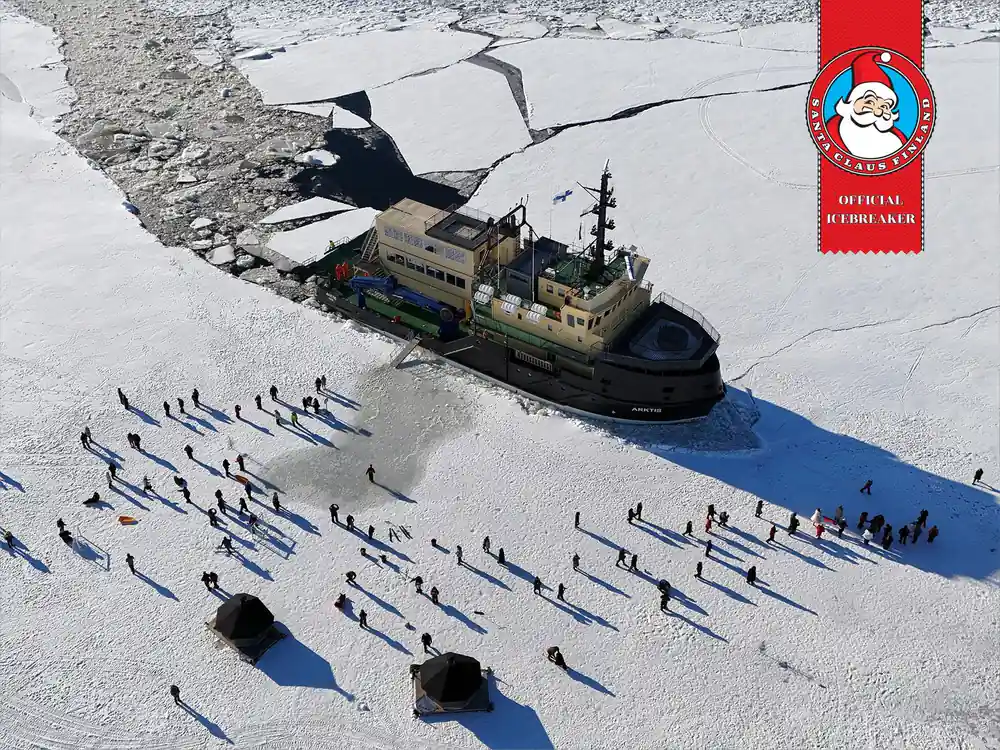
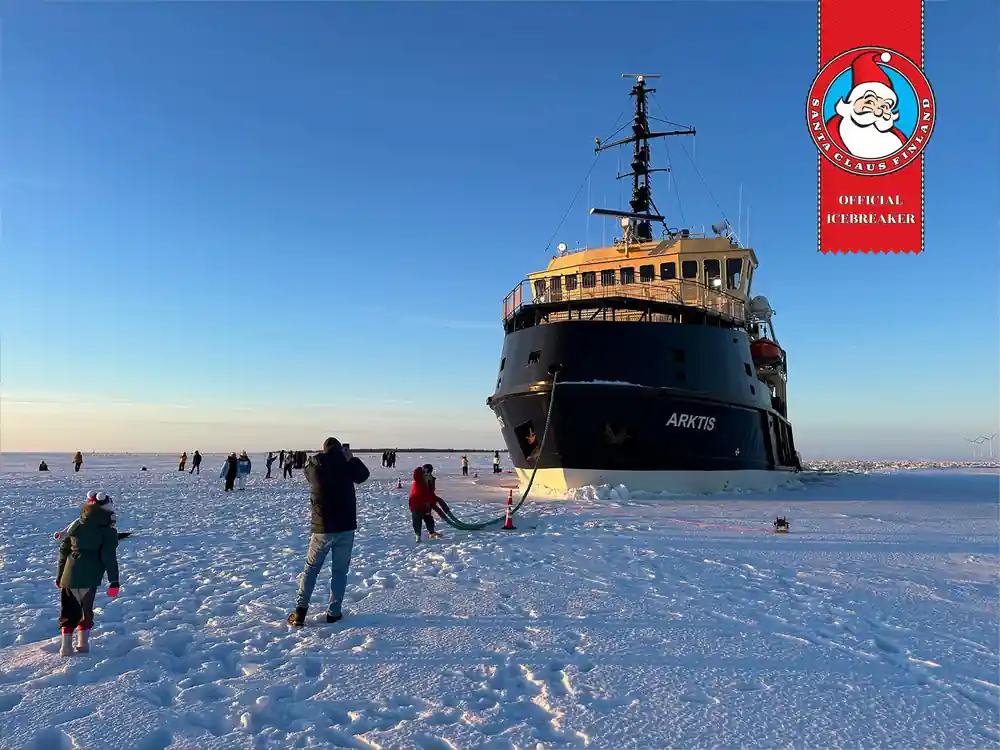
Weather and ice permitting, there is also the chance to get out and walk on the frozen surface, which is a different and quieter thrill than the floating.
It is difficult to describe how strange it is to stand on a sea. The horizon is wrong, the surface has the wrong texture underfoot, and there is a metre of water somewhere below that is doing nothing at all.
It depends on conditions and it is not promised, which is the correct way for an operator to describe anything involving ice.
A frozen sea, a sealed suit, and a few minutes on your back
from US$473Reserve now & pay later