The essentials
- A different design each winter since 1996, then left to melt in the spring.
- It sits next to the quay the icebreaker sails from, so the tour passes it.
- People sleep in it, marry in it and eat off tables made of ice.
- The SnowExperience attraction and the Gemstone Gallery are ticketed at the reception.
A building that is demolished by the weather
Kemi has built a castle out of snow beside its harbour every winter since 1996. Each year it is a new design, constructed from scratch as soon as there is enough snow to work with, and each spring it melts and is gone.
That is a genuinely unusual proposition. Almost every famous building on earth is famous partly for having lasted; this one is famous for the opposite, and the fact that it is different every winter means that no two visits are the same.
The scale varies with the year and the design. It is not a novelty igloo: it is a substantial complex of walls, halls and chambers that people move around inside.
How it is built
Snow is packed into forms and allowed to set, and ice is cut and placed as a structural and decorative material. Arched roofs are the standard solution because snow performs well in compression and badly in tension, which is the same reason medieval masons used arches.
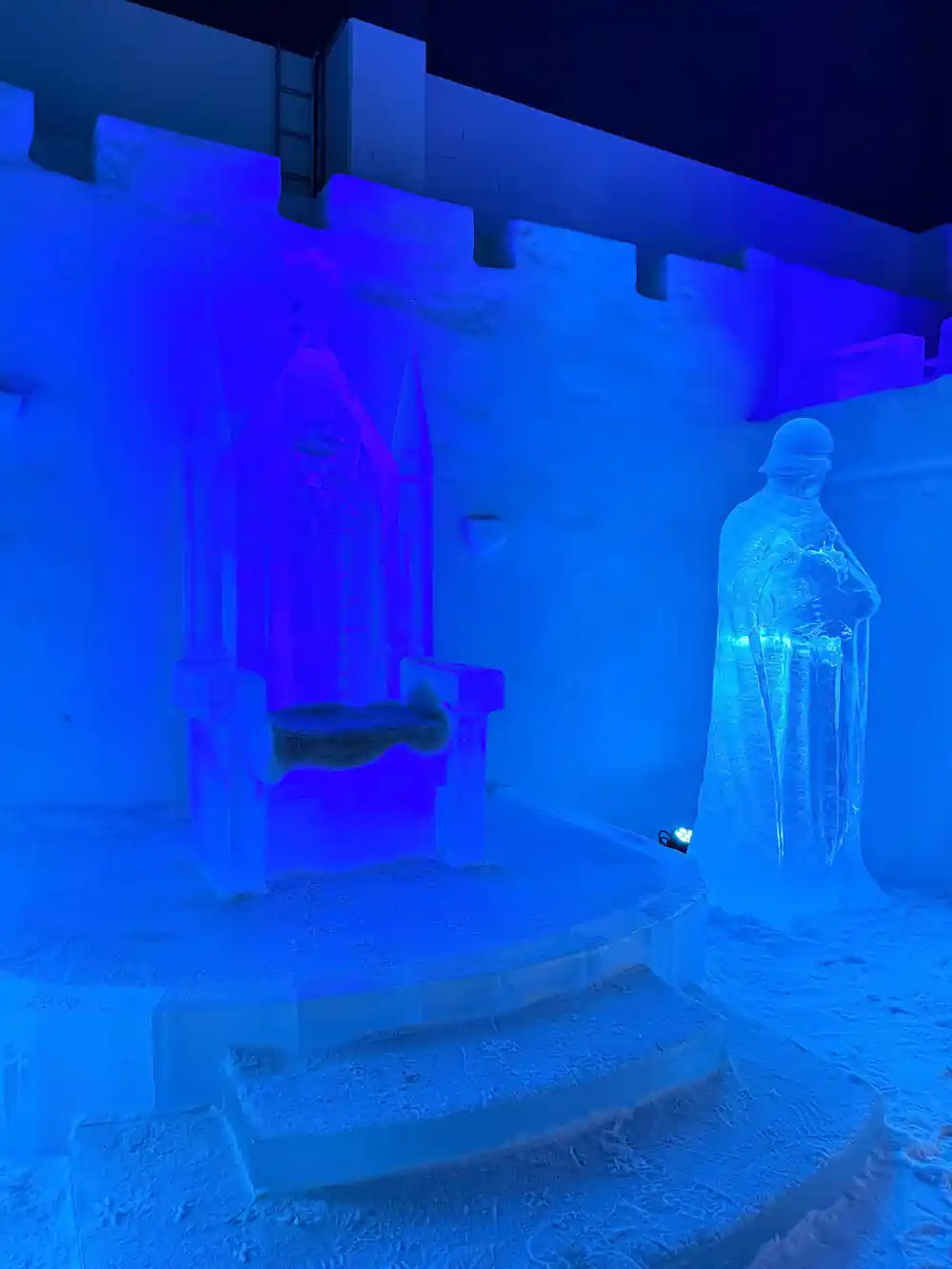
Interior surfaces are carved. Much of what makes the place worth seeing is the sculpture: reliefs, figures and detailing worked directly into the walls, lit from behind or within so that the ice glows.
Everything is temporary and everyone involved knows it, which produces a particular kind of ambition. There is no reason to be conservative with a building that has a lifespan of four months.
The engineering constraint that shapes everything is that packed snow is strong when squeezed and weak when stretched, so nothing can span a gap the way a steel beam does. Every opening therefore becomes an arch or a vault, and the resulting interior has the proportions of a Romanesque crypt rather than of a modern building. That is not a stylistic choice; it is what the material permits.
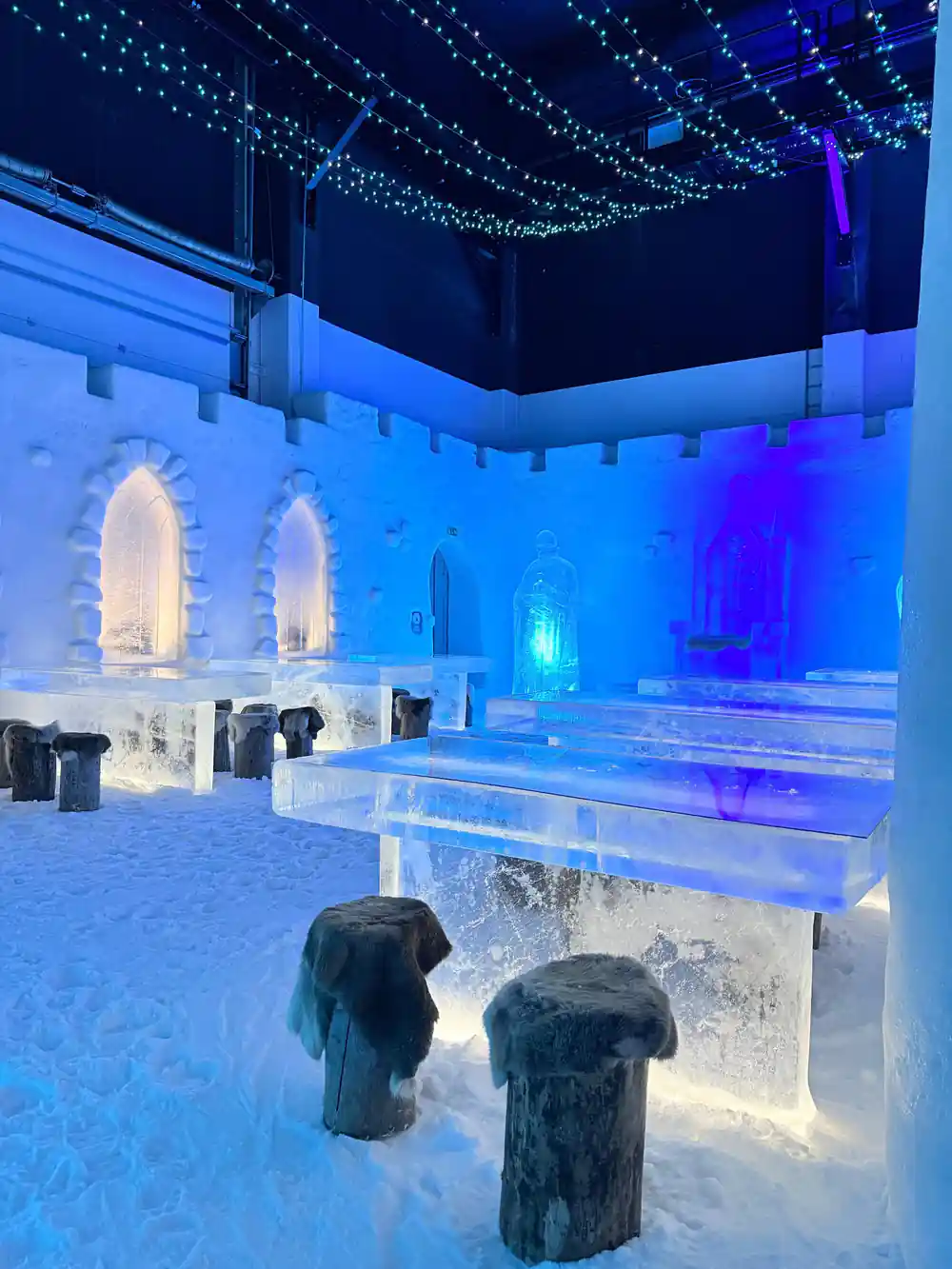
Carved snow walls lit from within
What is inside
An ice hotel, where the rooms are below freezing and the beds are insulated and people genuinely sleep in them. A chapel, in which weddings are held every winter. A restaurant where the tables and often the plates are ice.
The interior sits at a stable temperature a little below freezing, which is warmer than the outside air on most winter days on this coast. That is a property of snow rather than a heating system: it insulates extremely well.
Dress as you would for outside. It is cold in there, steadily and unspectacularly, and there is nowhere warm inside the structure to retreat to.
How it fits into this tour
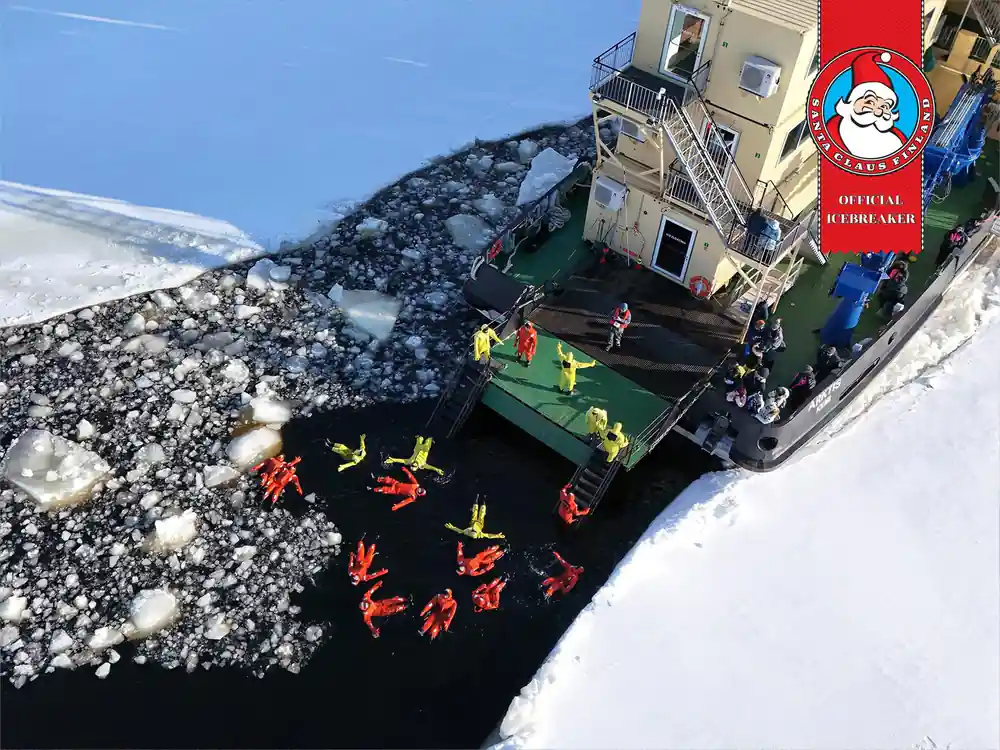
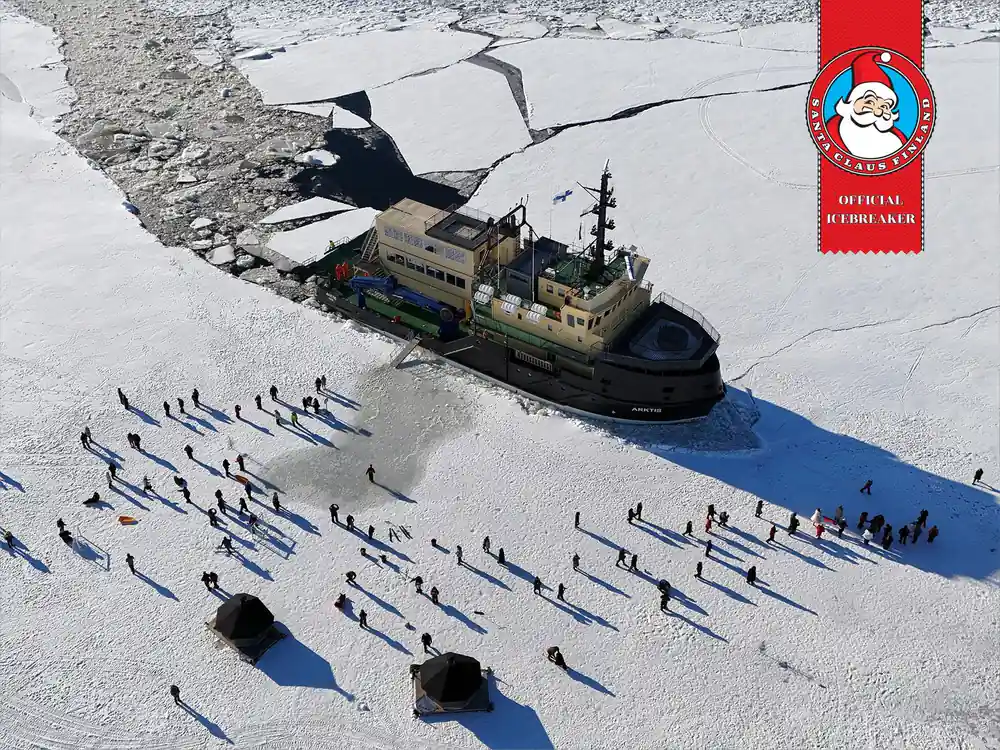
The harbour the icebreaker sails from is in the same area, so the day includes time here around the cruise. That is a large part of what makes ten hours tolerable: the four hours that are not on the ship are not four hours of waiting.
The SnowExperience indoor ice and snow attraction and the Gemstone Gallery are separate tickets, bookable in advance or bought at the SnowCastle area reception. Whether they are worth adding depends on how long the schedule leaves you.
Check with the guide on the day what the timings allow, because a morning and an afternoon departure leave very different gaps.
It also solves a problem that ten-hour tours frequently have, which is what to do with people before and after the main event. A harbour with nothing beside it would make the same day feel considerably longer, and a castle carved out of snow is a better answer to that than a waiting room with a coffee machine.
The season
It exists from around the turn of the year until spring, and the exact dates depend on the winter. Building starts when there is enough snow and ends when there is enough castle; melting begins when it begins.
That means the SnowCastle season and the icebreaker season broadly coincide, which is not a coincidence at all. Both are governed by the same thing, which is how cold the top of the Gulf of Bothnia is.
Late in the season the structure softens and parts of it may be closed. Early in the season it is at its sharpest.
Why a port town does this
Kemi is a small industrial town with a paper and timber history and a working harbour, in a part of Finland that very few foreign visitors had any reason to stop in.
The SnowCastle and the icebreaker between them changed that. They are the reason there is a winter tourism economy here at all, and they are both built on the same natural fact: a sea that freezes.
There is something admirable about a town that looked at four months of ice and decided to make it the product rather than the problem.
The economics are worth a thought as well. Neither the castle nor the icebreaker cruise could carry a town on its own, and together with the harbour and the mills they add up to a place that has a winter reason to exist for outsiders. Very few small industrial ports anywhere have managed that, and fewer still by leaning into the weather rather than apologising for it.
Photographing it
The interior is lit deliberately and the light is coloured, which cameras handle badly on automatic settings. Expect the whites to go blue and the coloured lighting to blow out.
It is worth switching off the flash entirely. Flat frontal light destroys carved relief, which is the entire point of the surfaces you are photographing, while the installed lighting is designed to reveal it.
And keep the camera under a coat between shots as you go in and out, because moving repeatedly between a cold interior and colder outside air is exactly the way to fog a lens.
A snow castle beside the quay, on the same day as the ship
from US$473Reserve now & pay later